
Description
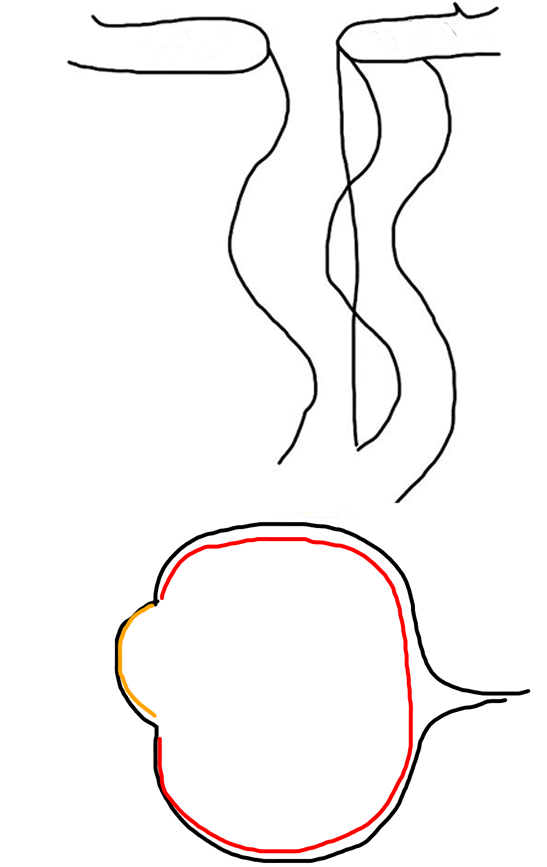
Dataset made up of 61 sketches created from entities of two anatomy exercises (Spine and Eye Exercises) drawn by 31 volunteers, including students and IRISA laboratory members. Each exercise is defined as a step-by-step tutorial created by a teacher, made of a reference drawing and of textual instructions to be followed at each step. The volunteers used the copying mode, in which the tutorial remains visible while the student draws, so that their production can be collected step by step and compared to the expected one. Each volunteer was asked to copy an Eye and a Spine exercise using as many strokes as they wanted, and the reference drawing was itself made of multiple strokes in order to lead the participants into doing the same.
References
If you use the dataset, you agree to cite the following reference:
@article{SERRE2026287,
title = {Automatic grammar extension for online multi-stroke recognition of hand-drawn semi-structured sketches},
journal = {Pattern Recognition Letters},
volume = {210},
pages = {287-294},
year = {2026},
issn = {0167-8655},
doi = {https://doi.org/10.1016/j.patrec.2026.10.003},
url = {https://www.sciencedirect.com/science/article/pii/S0167865526003764},
author = {Swan Serre and Islam Barchouch and Nathalie Girard and Eric Anquetil},
keywords = {Online hand-drawn sketch recognition, CD-CMG formalism, Multi-stroke analysis, Learning by drawing},
abstract = {This article presents an improvement to IntuiSketch, an intelligent tutoring system for pen-based tablets. The goal is to address the challenges of multi-stroke analysis in the context of online semi-structured sketch recognition. IntuiSketch relies on two engines: a supervision engine and a recognition engine. This article focuses on the latter, which is based on the Context-Driven Constraint Multiset Grammar (CD-CMG), combined with fuzzy logic and the Evolve classifier (which learns from a few examples) to recognize handwritten sketches in real time. While the recognition of mono-stroke structured sketches has already been successfully addressed, in practice, semi-structured sketches are often created using multiple strokes to draw an entity. Therefore, the number of strokes composing an entity becomes unpredictable. Moreover, in a learning context, sketch reproduction generates significant variability not only in the number of strokes but also in the shape of each stroke. To overcome these difficulties, we propose a hybrid recognition approach that automatically extends the CD-CMG formalism to support online multi-stroke analysis, without manual redefinition of the domain rules. The refined IntuiSketch system is evaluated using anatomical sketches to demonstrate its ability to accurately interpret multi-stroke sketches. This work highlights the adaptability of IntuiSketch to the diverse drawing behaviors of students, reinforcing its applicability in real-world educational contexts.} }
How to get the dataset ?
Before downloading the dataset, you agree that this dataset is under the CLIC licence and can only be used for research purposes. To receive the download link, please complete the following contact form.